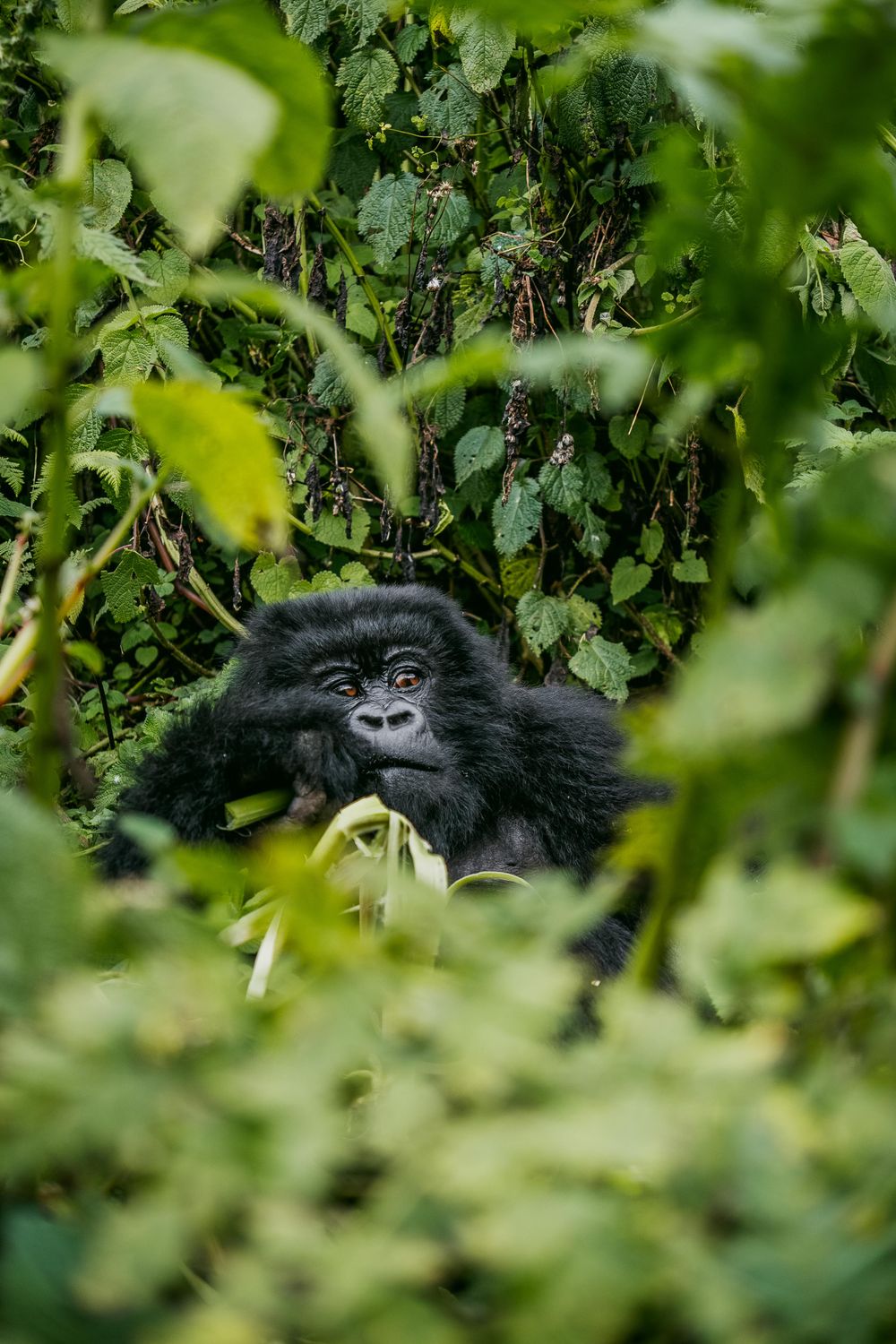
A Uganda safari is built differently from one in Kenya or Tanzania. Instead of several savannah parks close together, Uganda's highlights are spread across the country: gorillas in the far south-west, chimpanzees in the west, savannah parks in the west and north-west. Planning is mostly about distances - which places you can link without spending every day in the vehicle.
This guide explains how the main parks fit together and what you can realistically do in three, five or seven days.
Most trips start and end in Entebbe, where the international airport is. From there, Uganda's highlights form two loops:
The western and south-western loop: Entebbe → Kibale → Queen Elizabeth → Ishasha → Bwindi → back to Entebbe (often via Lake Mburo). This is the classic primates-and-savannah route.
The northern loop: Entebbe → Ziwa Rhino Sanctuary → Murchison Falls → back to Entebbe, sometimes adding Budongo Forest.
Linking the two loops is possible - Murchison to Kibale is roughly 5-6 hours by road - but it adds time.
These are typical times we plan around; traffic, road works and weather all affect them.
Scheduled light-aircraft flights connect Entebbe with airstrips near Bwindi, Queen Elizabeth, Kibale and Murchison, and can save a full day of driving each way.
One focus only. Either a gorilla trek in Bwindi (see our 3-day Bwindi trip) or a Murchison Falls safari (3-day Murchison trip). Driving both ways to Bwindi in three days is tiring; flying one or both legs makes it easier.
Gorillas plus one more experience: chimpanzees in Kibale (4-day gorilla and chimp safari), a savannah stop in Queen Elizabeth (5-day primates and wildlife) or a rest at Lake Bunyonyi.
The full western loop - chimps, Queen Elizabeth, Ishasha and gorillas - as on our 7-day Uganda safari. Or a broader route from Murchison in the north to Bwindi in the south, as on the 6-day primates and parks safari, accepting longer drives.
Both loops together, with time at Lake Mburo, Lake Bunyonyi or Jinja, and fewer back-to-back long drives.
Uganda is on the equator and green all year. The drier months - roughly June to August and December to February - are the most popular, with easier forest trails and good game viewing. The wetter months bring heavier rain, muddier trails and greener scenery, with fewer visitors. Gorilla and chimp tracking run every day of the year.
Fees are set by the Uganda Wildlife Authority and change periodically. We include current fees in your quote.
Decide first what matters most - usually gorillas - then add what fits around it. Five to seven days lets you combine forest primates with a savannah park without exhausting drives. If time is short, flying one leg is often worth the cost.
Three days for one experience such as gorillas, five days for gorillas plus one more highlight, and around seven days for gorillas, chimps and a savannah park together.
Yes. Many travellers fly from Entebbe to Nairobi or Kilimanjaro and continue with a savannah safari. We can plan both parts.
Driving is cheaper and shows you the countryside. Flying saves long transfer days and suits shorter trips. Many itineraries mix the two.
Send us your dates and what you most want to see, and we will suggest a route with realistic driving days.