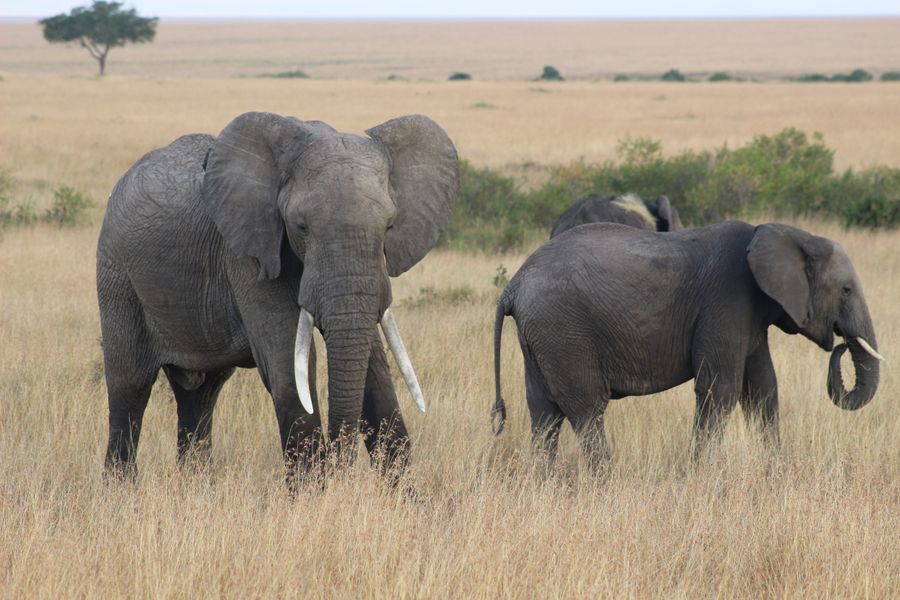
Tsavo is Kenya's largest protected area, split by the Nairobi-Mombasa road and railway into Tsavo East and Tsavo West. Together they cover a huge area of south-eastern Kenya, and that size defines the experience. Wildlife is more spread out than in smaller parks, but there are far fewer vehicles and a real sense of wilderness.
The two halves feel different. Tsavo East is flatter and more open, known for elephants dusted red by the volcanic soil. Tsavo West is hillier and greener, with lava flows, the clear pools of Mzima Springs and, on clear days, views of Kilimanjaro.
Because both sit on the main road to the coast, Tsavo is the natural safari for travellers heading to Mombasa or Diani - see our Mombasa and Diani guides.
Tsavo East is mostly open, dry bush and grass plains with the Galana River running through, and the long Yatta Plateau lava ridge along its western side. Tsavo West has volcanic cones, black lava fields such as Shetani, rocky hills and springs fed from the Chyulu Hills. Vegetation thickens a lot after the rains.
Elephants are the signature sight, especially in Tsavo East, where they often appear rust-red from dust bathing. Tsavo's lions became famous in the late 1800s and the parks still have healthy populations. Dry-country antelope such as fringe-eared oryx, lesser kudu and gerenuk are found here, along with buffalo, giraffe and zebra. At Mzima Springs you can watch hippos and fish from an underwater viewing chamber.
Game drives across Tsavo East's open plains
Mzima Springs and its underwater viewing chamber (Tsavo West)
Lugard Falls - a series of rapids cut into rock on the Galana River
Shetani lava flow and the views towards the Chyulu Hills and Kilimanjaro
Combining a game drive with onward travel to the coast
Tsavo rewards patience. Game drives cover more distance than in compact parks, and sightings come in bursts rather than continuously. The upside is space: you may drive for long stretches without seeing another vehicle.
The dry seasons, roughly June to October and January to February, draw wildlife to water and keep vegetation thinner. The wet seasons (roughly March to May and November to December) make the landscape lush and good for birds, but animals are harder to find in the thicker bush.
Read our full guide: Best Time to Visit Kenya for a Safari, Season by Season »
Both parks are roughly 4-5 hours from Nairobi by road, depending on which gate you use, and sit directly on the road to Mombasa. Tsavo is often visited on the way to or from the coast.
Everything from campsites to luxury lodges, with several properties built around waterholes or springs. Because the parks are so large, where you stay determines which areas you can realistically explore.
Tsavo East and Tsavo West charge separate park fees
Expect longer drives between sightings than in smaller parks
Malaria-risk area - take medical advice
A practical safari stop for travellers heading to Diani or Mombasa
Official park info: Kenya Wildlife Service
East for open plains and red elephants; West for varied scenery, Mzima Springs and Kilimanjaro views. Many trips include only one because of the distances.
It can be, especially combined with a beach stay. If seeing a lot of wildlife quickly is your priority, the Mara or Amboseli are more concentrated.
Yes. It lies on the Nairobi-Mombasa road, so it fits naturally before or after time on the coast.
Tell us your dates and we'll build an itinerary that includes it.