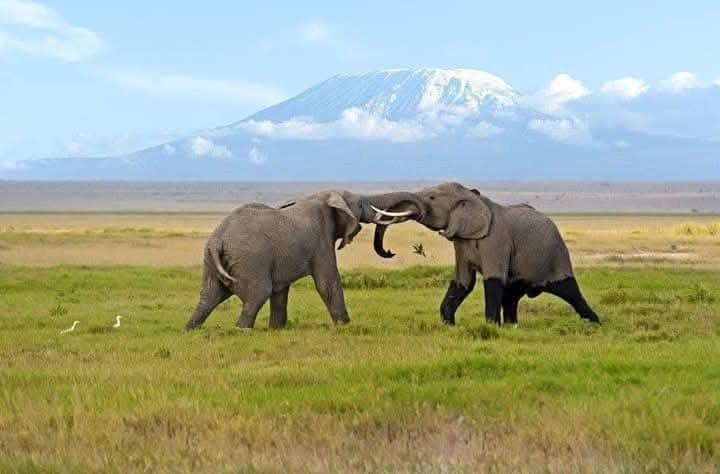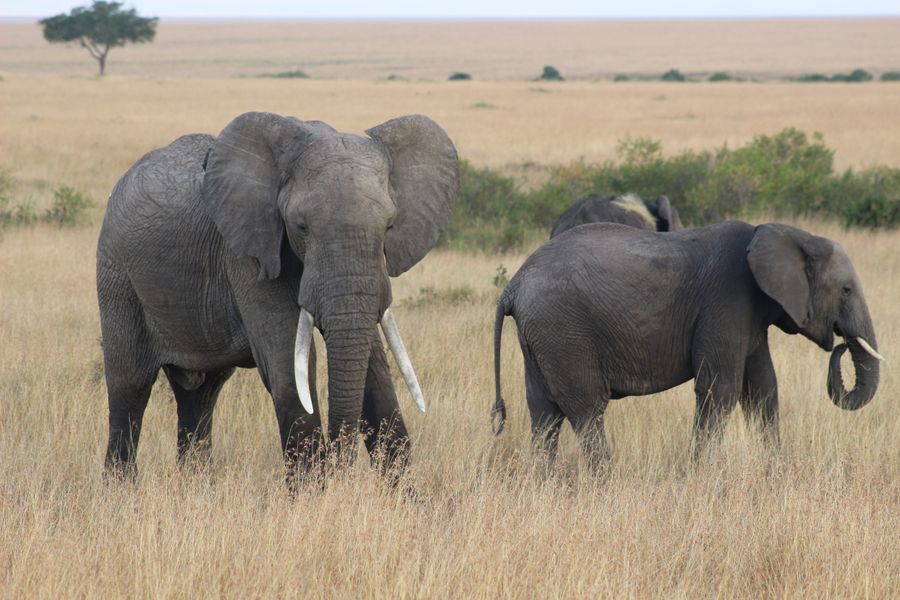
Amboseli National Park lies in southern Kenya on the Tanzanian border, at the foot of Mount Kilimanjaro. It is a small park compared with the Mara or Tsavo, but it is one of the best places in East Africa to spend time with elephants. Family herds are habituated to vehicles and move across open ground, so you can watch them at close range for long periods.
The park's other draw is the view. On clear mornings Kilimanjaro rises straight up from the plains, and elephants walking beneath it is one of the most photographed scenes in Kenya. Cloud often hides the mountain by mid-morning, so early drives matter here more than anywhere.
Amboseli suits short trips, photographers and travellers heading on to the coast or Tanzania. It is often paired with the Mara on a longer circuit.
Much of the park is an ancient, dry lake bed - flat, dusty and almost treeless in the dry season, sometimes shimmering with mirages. In contrast, a chain of swamps fed by underground water from Kilimanjaro stays green all year. These swamps are the heart of Amboseli and the reason wildlife concentrates here. Observation Hill gives a raised view across the swamps and plains.
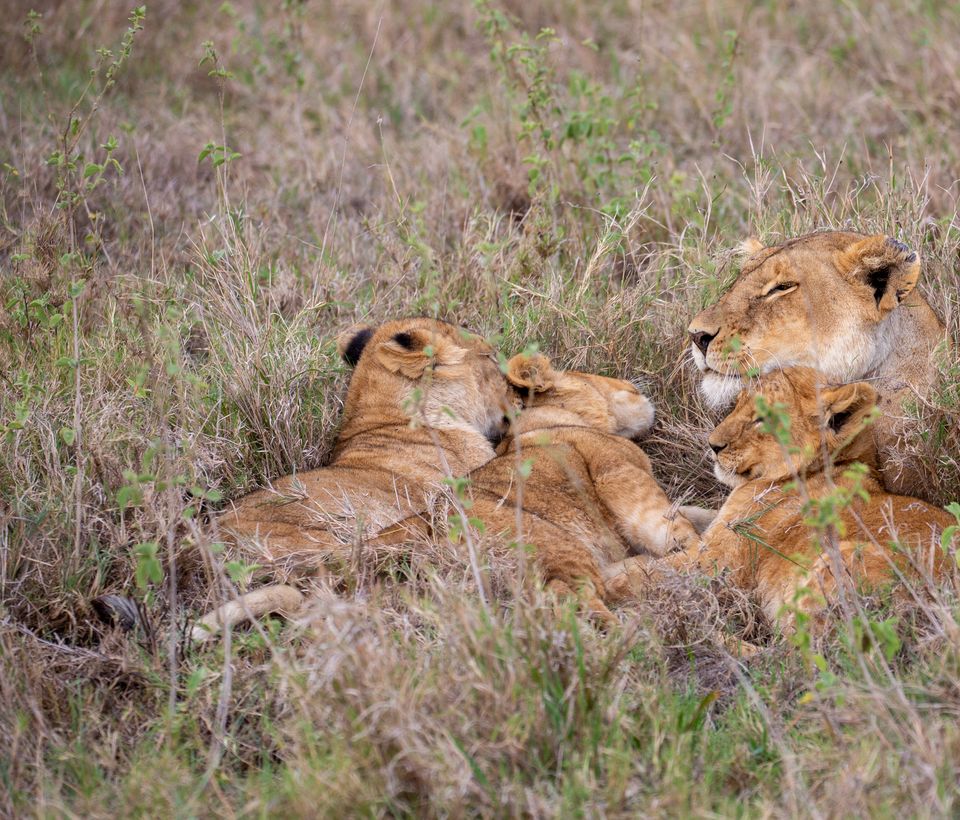
Elephants are the headline - Amboseli's herds have been studied for decades, and big-tusked bulls are sometimes seen. Buffalo and hippo wallow in the swamps, and zebra, wildebeest and giraffe graze the open plains. Lion and hyena are present, though cats are less frequent than in the Mara.
The swamps also attract pelicans, herons, egrets, jacanas and, at times, flamingos on the seasonal lake. Amboseli is not a rhino park and leopard are rarely seen.
Early-morning game drives for elephant and the best chance of a clear Kilimanjaro view
Observation Hill - one of the few places in the park where you can get out of the vehicle
Birdwatching along the swamp edges
Visit to a Maasai village outside the park
Conservancy activities, such as guided walks, on community land around the park
Game drives in Amboseli feel relaxed. Distances are short, the ground is flat and visibility is wide, so your guide can position the vehicle near a herd and let it walk past. Dust can be heavy in the dry season - a scarf helps. Midday heat is strong, so most people rest at camp between morning and afternoon drives.
The dry seasons - roughly June to October and January to February - bring the most wildlife to the swamps and the easiest game viewing. The wet months make the park green and are good for birds, with fewer visitors. Kilimanjaro is most often visible early in the morning in any season.
Read our full guide: Best Time to Visit Kenya for a Safari, Season by Season »
Amboseli is around 4 hours from Nairobi by road, depending on route and traffic. Scheduled flights from Wilson Airport to Amboseli's airstrip take about 45 minutes. The park is also close to the Namanga border crossing for onward travel to Arusha.
Lodges and tented camps sit inside the park and on surrounding community land, from budget campsites to luxury. Conservancy properties around the park allow walks and night drives that the national park does not.
Bring a scarf or buff for dust in the dry season
Malaria-risk area - take advice on prevention
Park fees are charged per person per 24 hours
Clouds usually cover Kilimanjaro by mid-morning - plan for dawn drives
Official park info: Kenya Wildlife Service
Often but not always. Your best chance is at first light, and staying two nights rather than one helps because the weather varies day to day.
Yes. Amboseli is near the Namanga border, so it can lead into a northern Tanzania safari via Arusha.
Yes. It is compact, flat and easy to cover, so even one full day gives you a strong elephant experience.
Tell us your dates and we'll build an itinerary that includes it.