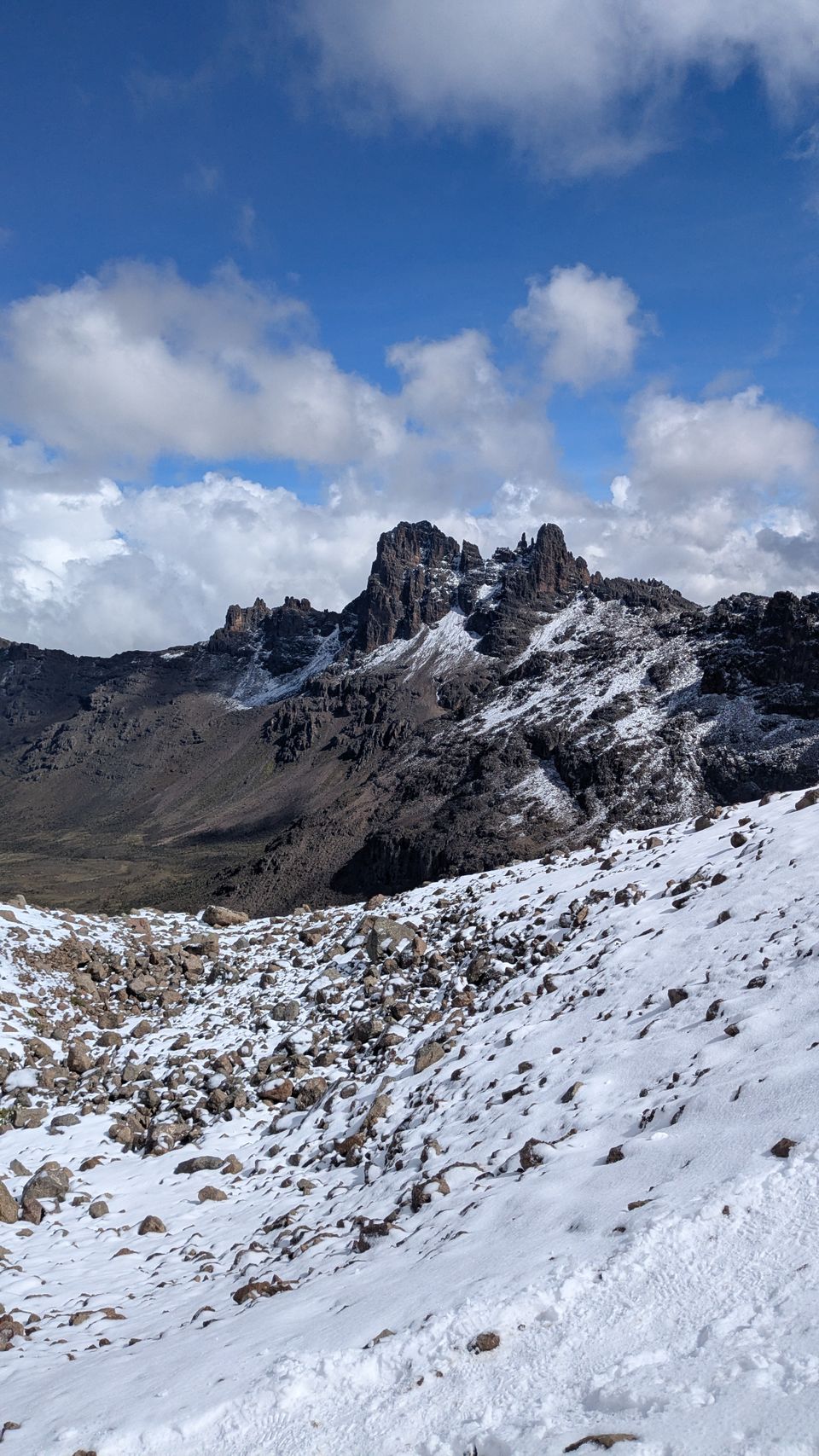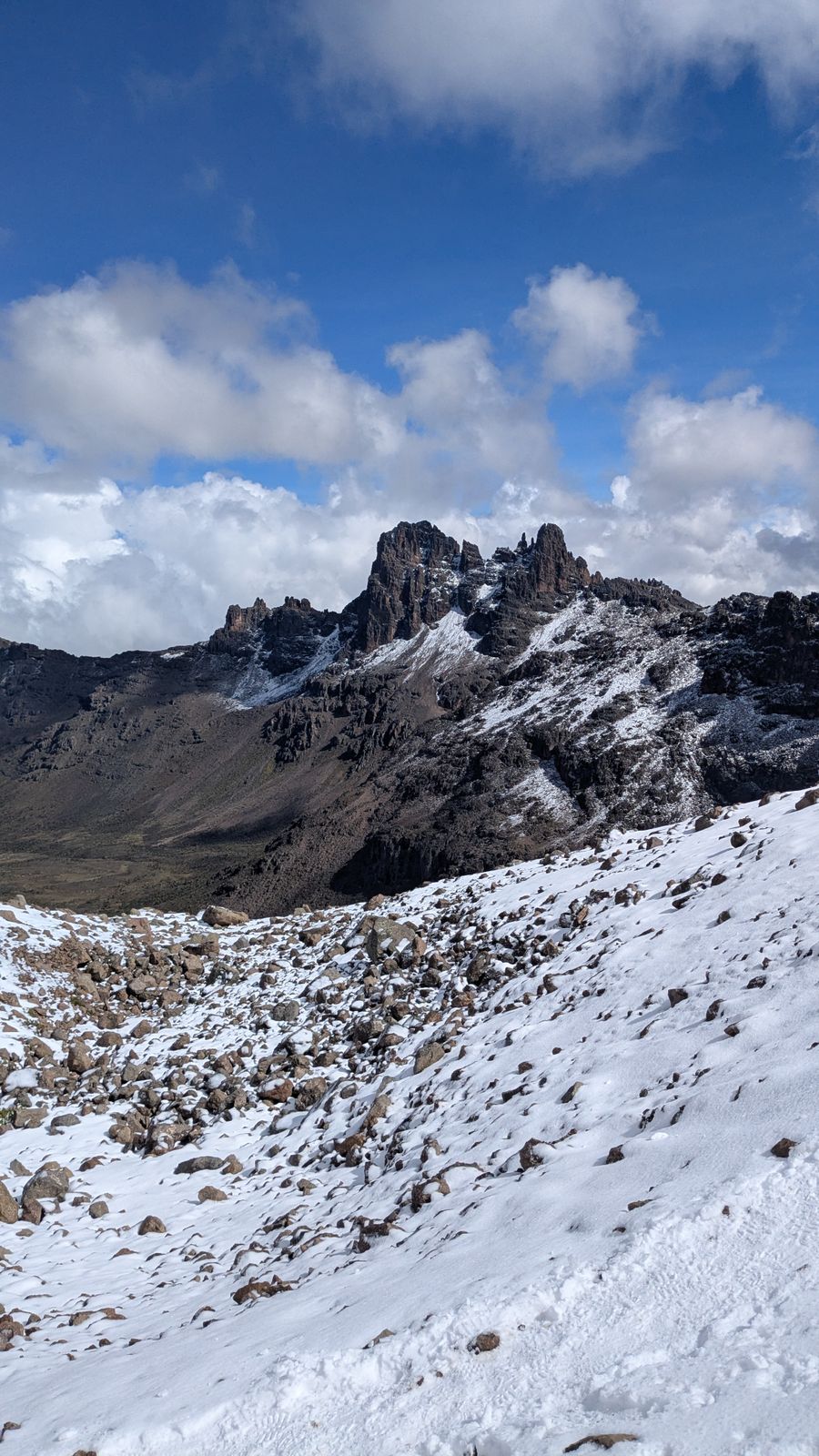
Mount Kenya is Africa's second-highest mountain, an extinct volcano rising from the central highlands north of Nairobi. It is a trekking destination rather than a safari park, and it offers something very different from game drives: several days on foot through forest, bamboo and moorland to a jagged summit area streaked with remnant glaciers.
The mountain has three summits. Batian (5,199m) and Nelion (5,188m) are technical rock climbs. Point Lenana (4,985m) can be reached by fit trekkers without climbing equipment, and that is where almost all visitors aim.
Mount Kenya is quieter than Kilimanjaro and sits conveniently between Nairobi and the northern parks, so it combines well with Samburu or Nanyuki. Our Mount Kenya climbing guide covers preparation in detail.
The lower slopes are farmland and montane forest, followed by a band of bamboo. Above about 3,000m the forest gives way to open moorland with giant groundsels and lobelias - plants that look almost prehistoric. Higher still is a bare alpine zone of rock, scree and small tarns below the peaks.
Wildlife is not the main reason to climb, but the forest holds elephant, buffalo and monkeys, and hyraxes are often seen around the high camps. The giant groundsels and lobelias of the moorland are a highlight for many trekkers.
Trek to Point Lenana via the Sirimon, Chogoria or Naro Moru routes
Traverse routes - up one side, down another - for more variety
Technical climbs of Batian or Nelion (experienced climbers only)
Day hikes in the lower forest
Trout fishing in mountain streams (permit required)
A typical trek involves several days of steady walking, nights at huts or camps that get colder as you climb, and a pre-dawn start for the final push to Lenana, aiming to arrive around sunrise. Altitude is the main challenge. Guides set a slow pace and will turn back anyone showing serious symptoms.
The driest periods are roughly mid-January to the end of February and July to October (some sources extend this to June). The wet seasons bring muddy trails, cloud and snow on the upper mountain.
Read our full guide: Mount Kenya Climbing Guide: Routes, Altitude and Preparation »
The trailheads are around 3-4 hours by road from Nairobi. Many treks include a night in Nanyuki or Chogoria first, to break the journey and start acclimatising.
Mountain huts and campsites on the trails, depending on the route. Hotels and guesthouses in Nanyuki and Chogoria for the nights before and after.
A licensed guide is required
Park entry and hut or camping fees apply
Nights near the top drop below freezing
Insurance covering trekking to 5,000m is essential
Official park info: Kenya Wildlife Service
Not for Point Lenana. You need fitness and time to acclimatise. Batian and Nelion require technical rock-climbing skills.
Kilimanjaro is higher and better known. Mount Kenya is quieter, often cheaper and scenically dramatic. Many trekkers use Mount Kenya as preparation for Kilimanjaro.
Four days is the minimum on Sirimon. Five or more days improves acclimatisation and lets you traverse to Chogoria.
Tell us your dates and we'll build an itinerary that includes it.