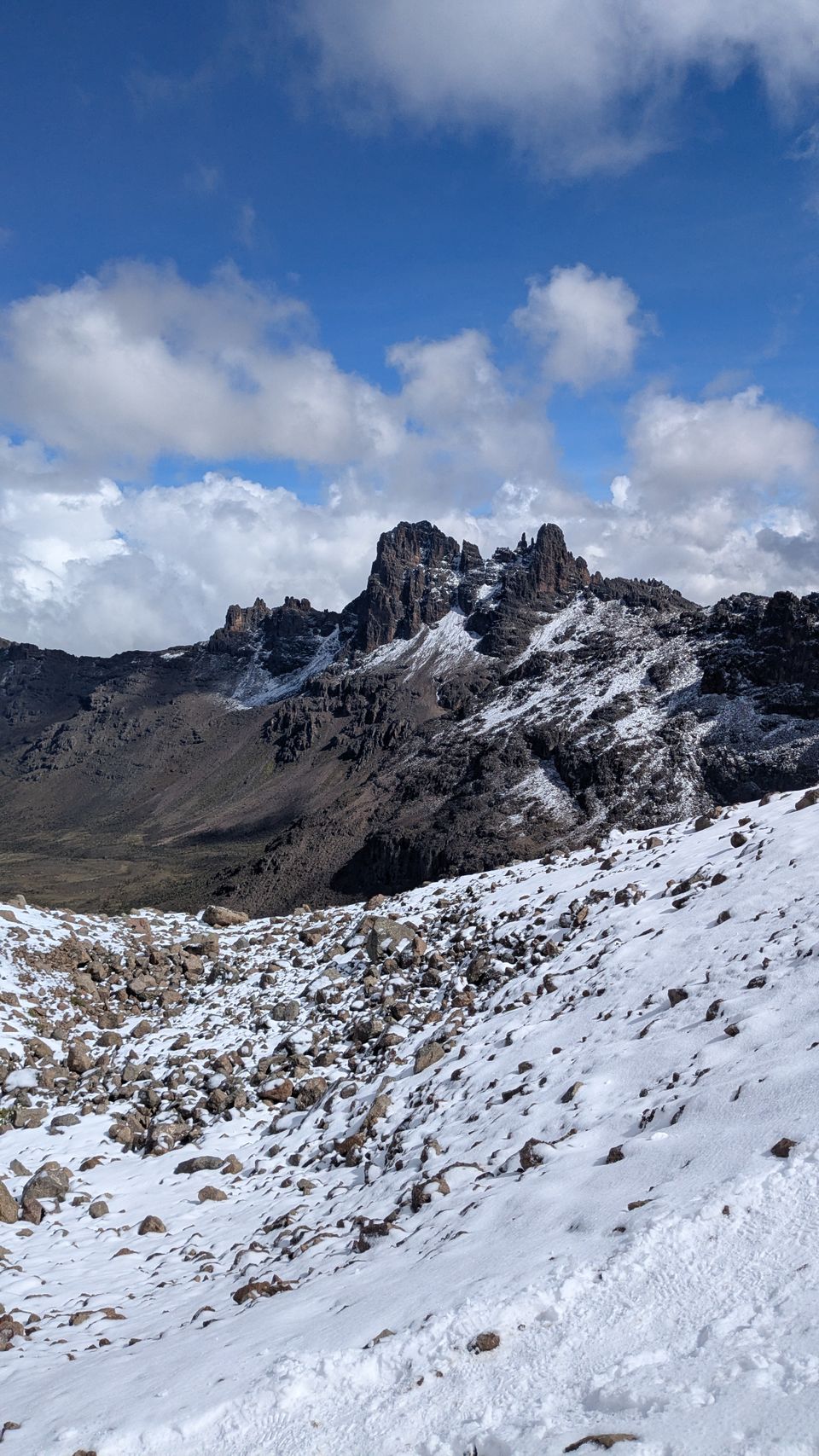
Mount Kenya has three summits, but only one of them is a trekking peak. Batian (5,199m) and Nelion (5,188m) need technical rock-climbing skills. Point Lenana (4,985m) can be reached on foot, and that is the goal of this trek.
The Sirimon route climbs the drier north-western side of the mountain. The first day takes you through forest into moorland; the second is a long, steady walk up to Shipton's Camp beneath the main peaks; the third starts in the dark for the push to Lenana. The scenery changes fast - giant lobelias and groundsels in the Mackinder Valley are one of the sights people remember most.
Four days is a quick ascent to nearly 5,000m, and we are honest about that: altitude affects people differently, and reaching the top is never guaranteed. Your guide makes the call on summit morning. You need reasonable fitness and ideally some multi-day hiking behind you. Group camping equipment, a qualified guide, porters and meals on the mountain are included. For more background, read our Mount Kenya climbing guide.
Journey at-a-glance:Customize This Journey. Request More Information »
 OLD MOSES CAMP (3,300M)
A summit attempt on Point Lenana (4,985m), Mount Kenya's trekking peak
The Sirimon side's gradual approach through forest and moorland
Afro-alpine plants including giant lobelias and groundsels
Option to extend into a Sirimon-Chogoria traverse
Drive north from Nairobi to the Sirimon Gate on the mountain's north-western side, where you meet your crew. The first walk is a gentle introduction: about 650m of ascent through montane forest and into moorland to reach Old Moses Camp.
The longest day of walking, gaining roughly 900m across open moorland with the peaks gradually coming into view. The pace is deliberately slow to help you acclimatise. You arrive at Shipton's Camp in the afternoon, eat early and rest before the night start.
A pre-dawn start for the climb to Point Lenana, aiming to reach the top around sunrise if conditions allow. After time at the summit you begin the descent. The standard plan returns down the Sirimon side; if you have added a day, you can descend via Chogoria for different scenery.
The final descent takes you back down through the vegetation zones to the gate, where your vehicle is waiting for the drive to Nairobi. You usually arrive in the evening.
Planning tip: see our guide on Mount Kenya Climbing Guide: Routes, Altitude and Preparation.
Accommodation: Mountain huts or camping on the route. You need your own sleeping bag, which can be hired locally.
Vehicle: 4x4 transfer vehicle to and from the trailhead
The driest periods are roughly mid-January to the end of February and July to October (some sources extend this to June). The wet seasons bring muddy trails, cloud and snow on the upper mountain.
Full Mount Kenya destination guide »
Meals on the mountain and park and hut/camping fees are included
Personal gear, sleeping bag hire and tips are not included
Travel insurance that covers trekking to 5,000m is strongly recommended
No. Point Lenana is reached on trekking paths without ropes. You do need good fitness and ideally some multi-day hiking experience.
Altitude sickness, because you gain height quickly over four days. Speak to your doctor about altitude medication before you travel, and tell your guide straight away if you feel unwell.
The driest periods are usually mid-January to the end of February and July to October. Weather at altitude can change quickly in any month, so come prepared for cold, wind and rain.
Warm layers, a sleeping bag rated below freezing, waterproof boots and a waterproof jacket are essential. Much of the bulkier gear can be hired locally.
Send us your travel dates and group size and we'll confirm availability and pricing.