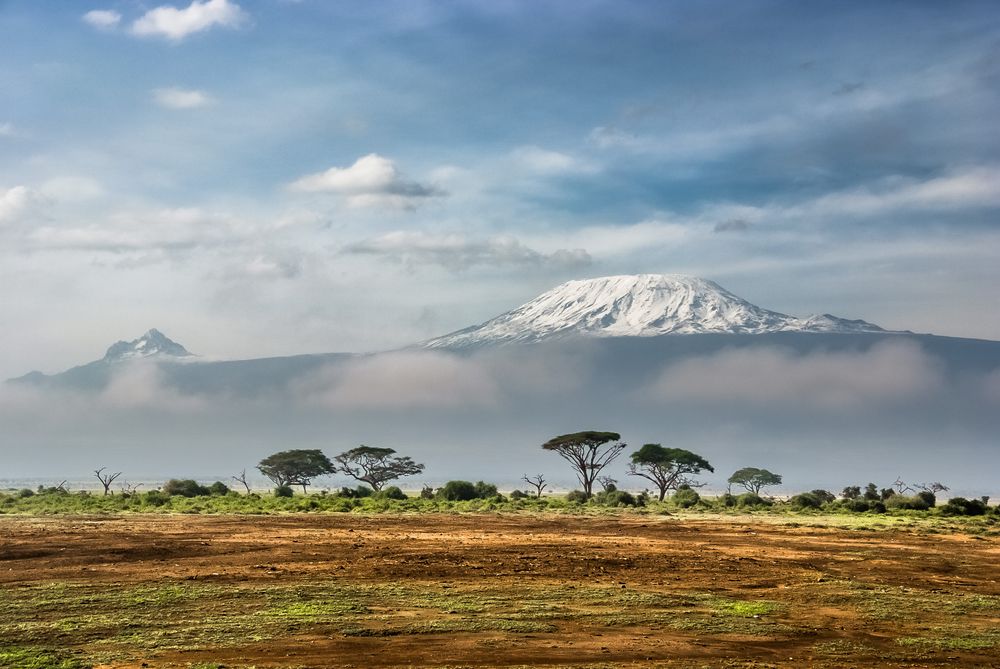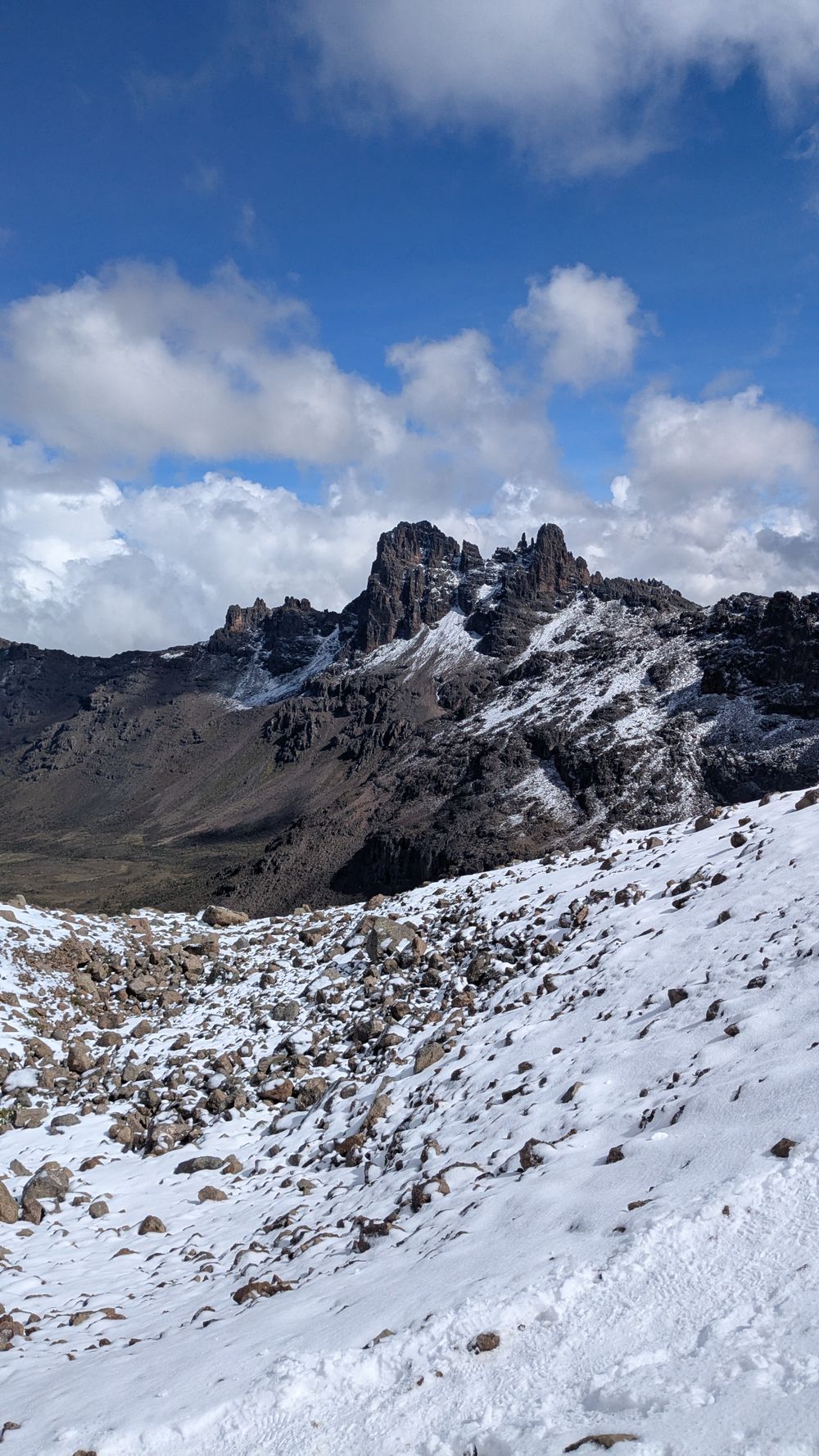
Most trekkers on Mount Kenya aim for Point Lenana (4,985m), which can be reached on foot without ropes or climbing skills. The mountain's true summits, Batian (5,199m) and Nelion (5,188m), are technical rock climbs for experienced mountaineers.
A Lenana trek takes four to six days, depending on the route. The main challenge is altitude: you gain height quickly, so pacing and acclimatisation matter more than raw fitness.
Many trekkers go up one route and down another - Sirimon up and Chogoria down is a popular combination that adds a day and a lot of variety.
Adding a day - either an acclimatisation day or a descent via Chogoria - makes the trek more comfortable.
You climb above 4,000m within two days, which is faster than on many Kilimanjaro routes. Mild headaches and breathlessness are common. Warning signs such as severe headache, confusion, vomiting or loss of coordination mean you must tell your guide and descend.
You should be able to walk for several hours a day on consecutive days over uneven ground. Hill walking with a daypack in the weeks before your trip is the best preparation.
Bulky items can usually be hired before the trek.
The driest periods are roughly mid-January to the end of February and July to October. The mountain can be climbed at other times, but expect more rain, mud and cloud. Weather at altitude can change quickly in any month.
Choose Sirimon for a well-paced first trek, add a day if you can, walk slowly and listen to your guide. Mount Kenya is quieter than Kilimanjaro and rewards those who prepare. If you are considering both, read our Kilimanjaro trekking guide.
Point Lenana is a demanding trek, mainly because of the altitude. It does not need technical skills.
Lenana is lower than Uhuru Peak, but the standard itineraries gain height faster. Many people find the two comparable.
Four days minimum on Sirimon; five or six for a traverse or extra acclimatisation.
Tell us your dates and hiking experience and we will suggest the right route and number of days.