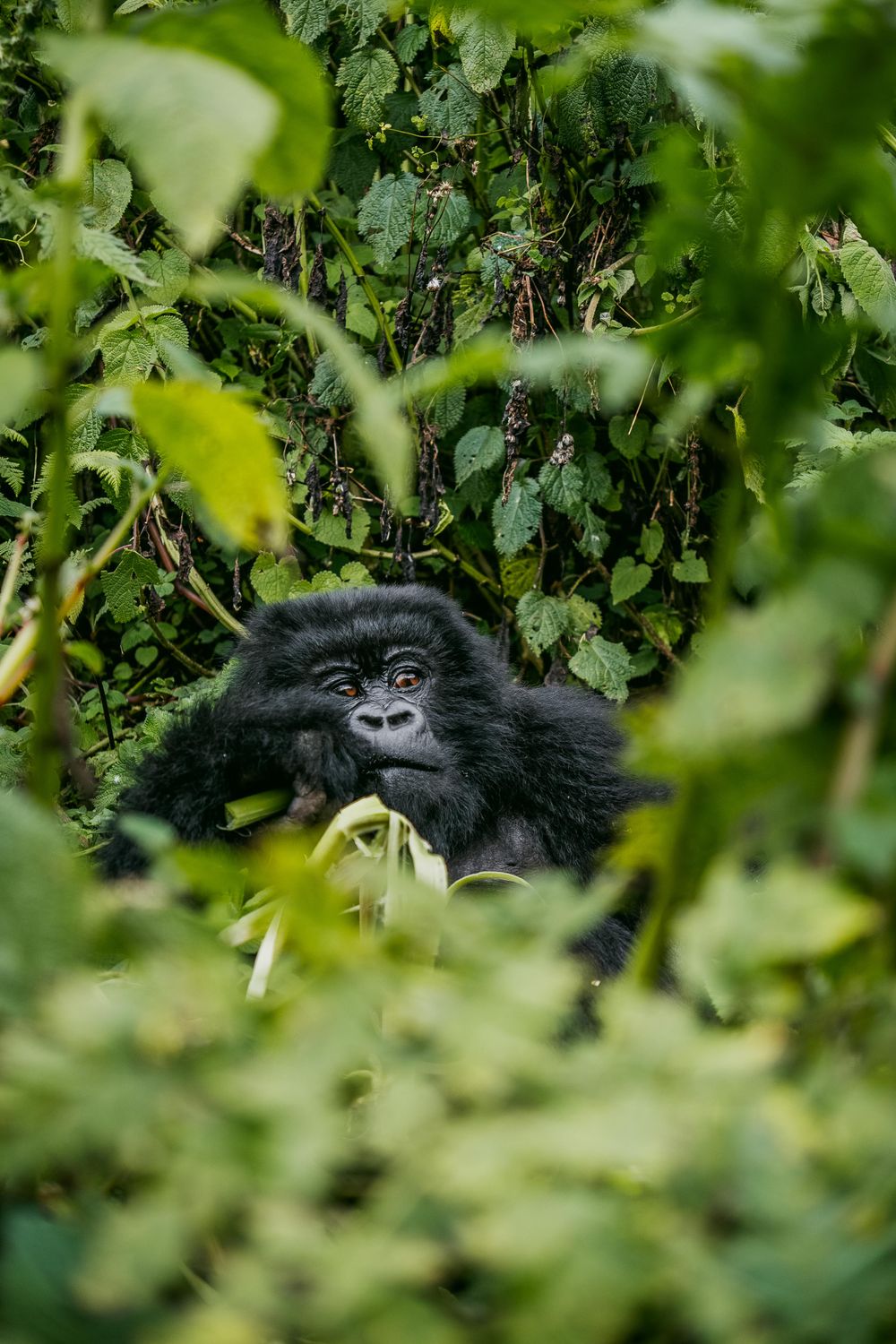
Gorilla trekking means walking into the forest with a ranger to find a habituated family of mountain gorillas, then spending one hour with them. In Uganda this happens in two parks - Bwindi Impenetrable Forest and Mgahinga Gorilla National Park - and every visitor needs a permit for a specific date and sector.
The walk can be short or long, easy or hard, depending entirely on where the gorillas have moved overnight. What does not change is the hour itself, which most people describe as one of the most affecting wildlife experiences they have had. This guide explains how the day works and what you can do to prepare.
Bwindi Impenetrable Forest holds roughly half the world's mountain gorillas and has many habituated families spread across four trekking sectors: Buhoma in the north, Ruhija in the east, and Rushaga and Nkuringo in the south. Each sector has its own families, trailheads and lodges. Your permit is for one sector, so it decides where you stay.
Mgahinga Gorilla National Park, in the Virunga volcanoes on the Rwandan border, has a single habituated family and far fewer permits. It also offers golden monkey tracking and volcano hikes, which some travellers combine with a gorilla trek.
Permits are issued by the Uganda Wildlife Authority and limited to a small number of visitors per gorilla family per day. In the busiest months - roughly June to September and December to February - they can sell out months ahead. We recommend confirming your dates and securing the permit before booking flights.
Permit prices are set by the Uganda Wildlife Authority and change from time to time, so we quote the current rate when you enquire rather than publishing a figure that might be out of date. There is also a minimum age for trekking (currently 15).
There is a second option called the gorilla habituation experience, available in some Bwindi sectors. You spend up to four hours with a family that is still getting used to people, accompanying researchers and trackers. It costs more, has very few places and involves more walking.
You do not need to be an athlete, but the fitter you are, the more you will enjoy the day. Expect steep slopes at altitudes of roughly 1,100-2,600m, slippery ground and humidity. Regular walking on hills in the weeks before your trip helps more than anything else.
Hiring a porter at the trailhead is strongly recommended. Porters carry your daypack, help you up steep sections and are local people for whom this work is an important income. A walking stick is usually provided.
Our Kenya safari packing list covers general safari items; add the forest-specific gear above for Uganda.
Treks run every day of the year. The drier months - roughly June to August and December to February - are the most popular because trails are less slippery. The wetter months still work well, are quieter and can make it easier to get permits. The forest is wet at any time, so plan for rain whenever you go.
A gorilla trek needs at least three days if you drive from Entebbe: a travel day in, the trekking day and a travel day out. Flying to an airstrip near Bwindi shortens the transfers. Many travellers add Lake Bunyonyi for rest afterwards, or combine gorillas with chimpanzees in Kibale and a savannah safari in Queen Elizabeth National Park - see our guide to planning a Uganda safari.
These rules exist because gorillas can catch human diseases. The permit fees fund protection of the forest and support neighbouring communities.
Gorilla trekking needs planning - permits first, then logistics - and a reasonable level of fitness. On the day, the uncertainty is part of the experience: you will not know whether the walk is one hour or four until you find the family. Book early, hire a porter, pack for mud and rain, and give yourself time to rest afterwards.
Anywhere from under an hour to most of a day, including one hour with the gorillas. It depends on where the family has moved overnight.
Not usually. Your permit is for a sector, and rangers assign families on the morning of the trek, taking fitness into account where they can.
Yes, when you follow the ranger's instructions. Habituated gorillas are used to people, and rangers know each family well.
Both offer excellent trekking. Rwanda's Volcanoes National Park is closer to Kigali; Bwindi has more families and is often combined with other Ugandan parks. We plan trips in Uganda.
Tell us your travel dates and we will check permit availability and suggest a route that fits.