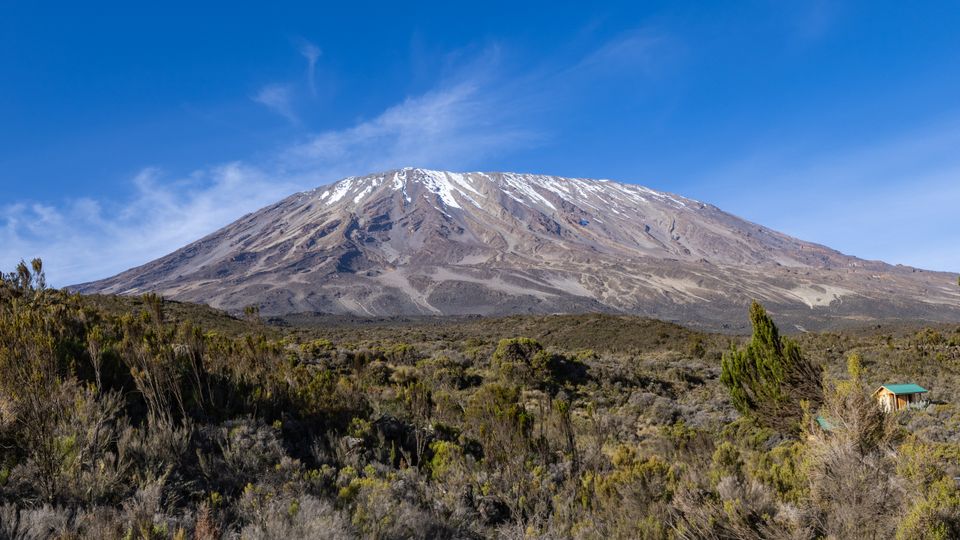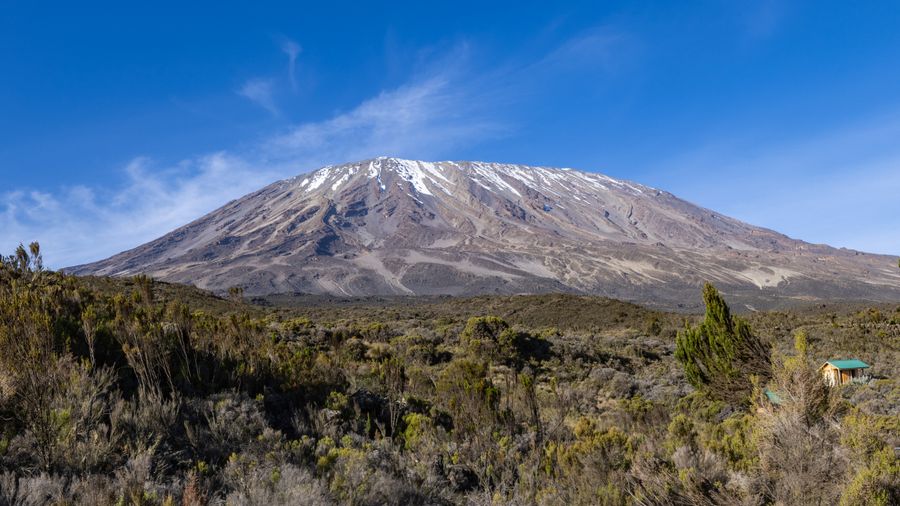
Kilimanjaro is Africa's highest mountain, with Uhuru Peak at 5,895m. It is a free-standing volcano rising from farmland in northern Tanzania, and every standard route to the top is a walking trail - no ropes or climbing skills are needed.
That makes it achievable for fit people without mountaineering experience, but it does not make it easy. The altitude is the real challenge, and a significant share of climbers do not reach the summit, usually because of altitude sickness rather than the difficulty of the path. The two decisions that matter most are which route you take and how many days you allow.
Most climbs start from Moshi or Arusha, and many people add a safari on the northern circuit afterwards. Our Kilimanjaro trekking guide explains preparation and summit night.
The climb passes through distinct zones: cultivated lower slopes, then rainforest, heath and moorland with giant groundsels, a stony alpine desert, and finally the summit zone of ice, scree and the remains of glaciers around the crater rim. The Shira Plateau, Barranco Valley and the Kibo cone are among the landmarks on the main routes.
Animals are mostly seen in the lower forest, where monkeys are common. Above the treeline there is little wildlife, and the interest shifts to the plants and the scenery.
Machame route - popular, scenic, good acclimatisation over 7 days
Lemosho route - western approach, quieter at first, usually 7-8 days
Marangu route - the only route with huts instead of tents
Rongai route - from the northern side near the Kenyan border
Lower-slope day hikes, coffee tours and waterfall walks around Moshi
Days on the mountain follow a rhythm: wake to tea at your tent, walk for 4-7 hours at a slow pace, eat, rest and sleep early. Your crew carries the camp and cooks. Summit night starts around midnight from high camp and takes most of the following day - a long, cold climb in the dark, then a long descent.
The two main dry windows are roughly late June to October and December to mid-March. The long rains (around April and May) are generally avoided; a shorter rainy period around November can also affect conditions.
Read our full guide: Kilimanjaro Trekking Guide: Routes, Acclimatisation and Summit Night »
Fly to Kilimanjaro International Airport, about an hour from Moshi and 45 minutes from Arusha. Climbers usually spend a night in Moshi or Arusha before and after the climb.
Tents on most routes, carried and pitched by your crew; huts on the Marangu route. Hotels in Moshi and Arusha for the nights either side.
Longer itineraries (7-8 days) give better acclimatisation
Park, camping and rescue fees are significant - they are included in our climb prices
Ask any operator how porters are paid and equipped
Insurance must cover trekking to 6,000m and evacuation
Official park info: Tanzania National Parks Authority
For most first-time climbers, Machame or Lemosho over 7-8 days balances scenery and acclimatisation. Marangu suits people who want huts; Rongai is quieter.
Seven or more on most routes. Faster itineraries give your body less time to adjust and lower your chance of reaching the top.
No. You need fitness, warm gear and realistic expectations about the altitude.
Tell us your dates and we'll build an itinerary that includes it.