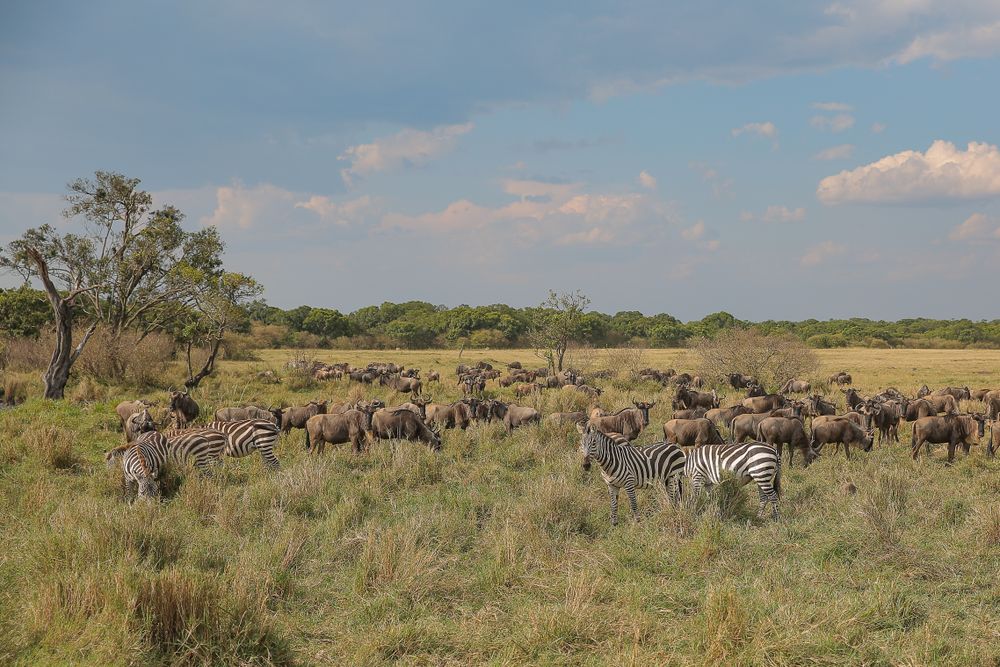
The wildebeest migration is the year-round movement of well over a million wildebeest, together with large numbers of zebra and gazelle, around the Serengeti-Mara ecosystem in Tanzania and Kenya. It is not a single event on a fixed date. The herds move in a rough loop, following rain and fresh grass, and their exact position changes from year to year.
That means the right question is not "when is the migration?" but "where are the herds likely to be in the month I can travel?" The guide below answers that, with the caveat that rainfall always has the final say.
In simple terms, the herds spend the wet season on the short-grass plains of the southern Serengeti, where the grass is rich in minerals and the wildebeest give birth. As the plains dry out, they move west and north through the Serengeti, reaching the northern Serengeti and Kenya's Masai Mara in the dry season. When the short rains return late in the year, they move south again.
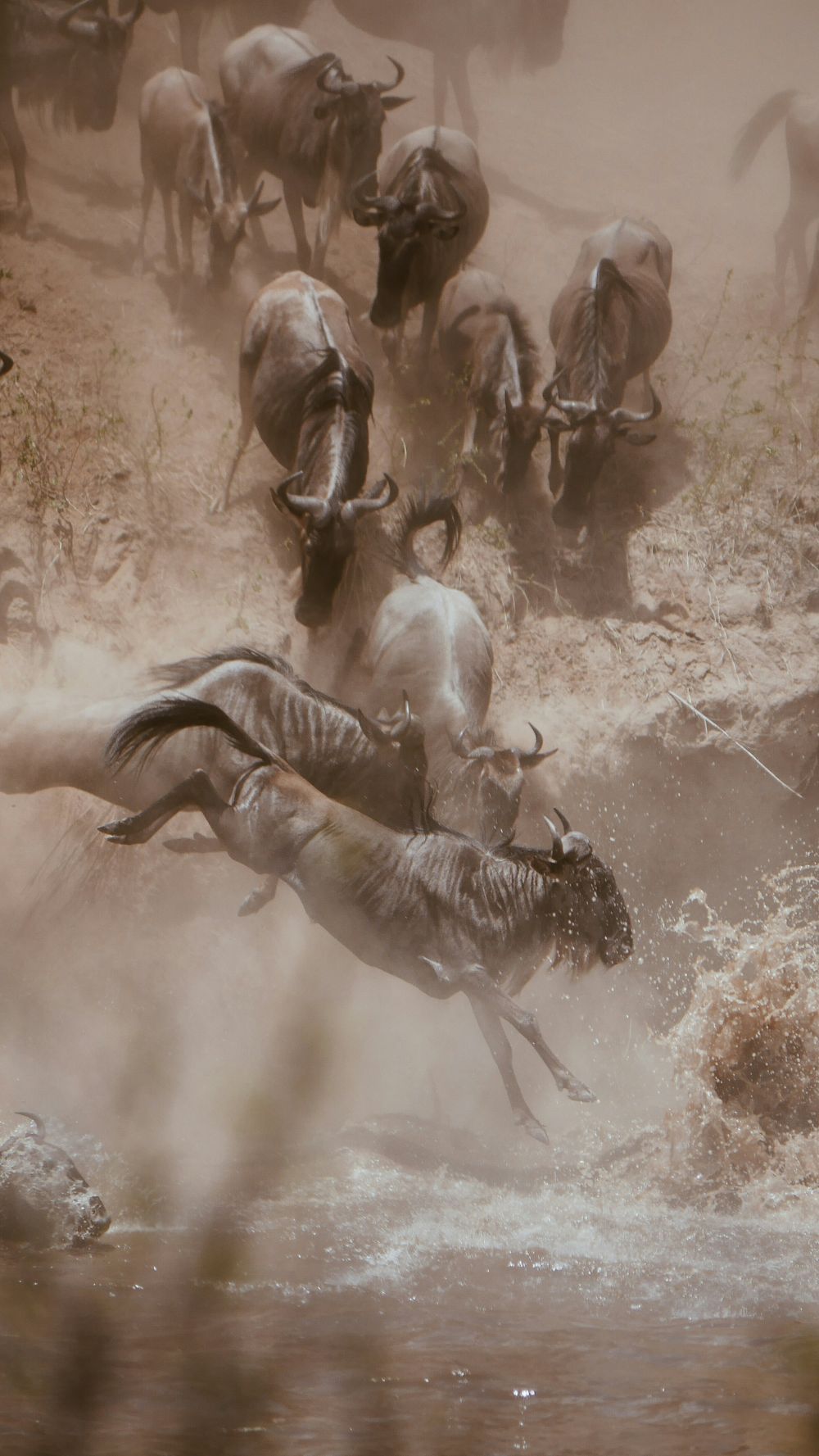
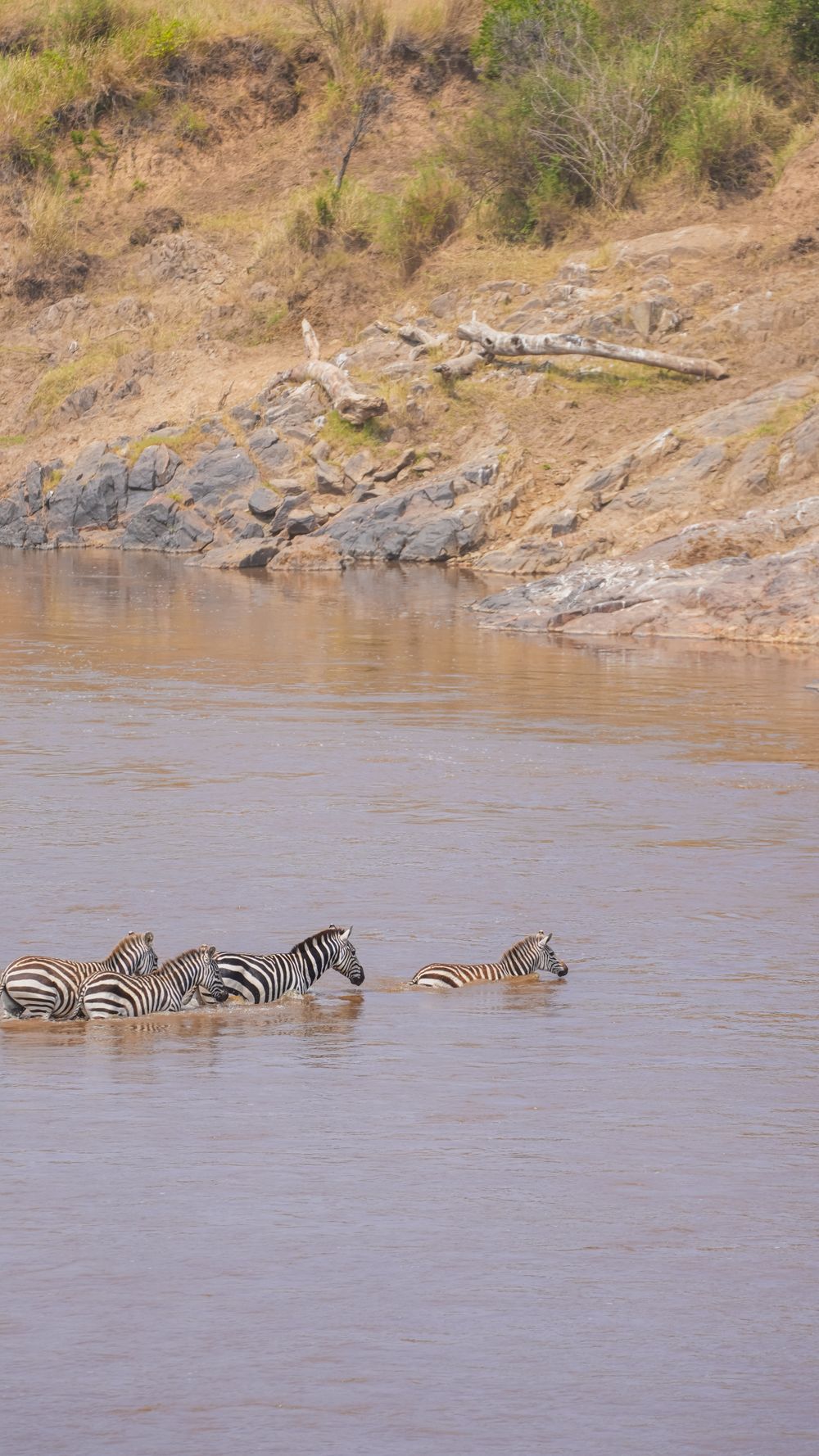
Along the way they cross rivers - the Grumeti in the western Serengeti and the Mara River in the north - which is where the famous crossing scenes happen.
The herds are usually spread across the southern Serengeti and the edge of the Ngorongoro Conservation Area. Hundreds of thousands of calves are born, mostly within a few weeks around February. Predators gather, and sightings of lion, cheetah and hyena hunting are common.
The herds begin moving north-west through the central Serengeti. This is the wettest time of year; some camps close and roads can be difficult, but prices are lower and the plains are very green.
Large columns move through the western corridor and central Serengeti. The rut (mating season) is often under way. Grumeti River crossings may happen, though they are less predictable than the Mara crossings.
The herds reach the northern Serengeti and, in many years, cross into the Masai Mara. This is the peak period for Mara River crossings. Herds may cross back and forth several times. It is also the busiest and most expensive time to visit both parks.
With the short rains, the herds move back through the eastern Serengeti towards the southern plains, ready for calving again.
Our article Kenya vs Tanzania safari covers the wider differences.
Crossings are dramatic but unpredictable. Herds can gather at a riverbank for hours or days and then turn away. A crossing might happen at dawn at one point and at midday several kilometres away. Your guide will position the vehicle where crossings are likely and wait - which can mean long hours by the river. No operator can guarantee you will see one.
If crossings are your priority, give yourself at least two or three full days in the right area.
The migration follows the rain, so plan by region and season rather than by a fixed date. Calving in the southern Serengeti early in the year and river crossings in the north from about July to October are the two highlights. Give yourself enough days in the right area, and expect to wait.
It depends on what you want. January to March for calving in the southern Serengeti; July to October for river crossings in the northern Serengeti and the Masai Mara.
No. The large herds are usually in the Mara from around July to October. The rest of the year they are in Tanzania.
No. Crossings depend on the animals' behaviour on the day. Spending more time near the river improves your chances.
Tell us your travel month and we will suggest where to base yourself for the best chance of finding the herds.